Colorado ruling means Denzel Aberdeen gets a fifth season to play for the Gators

There is this scene in the classic movie “Cool Hand Luke” in which chain gang inmates Luke Jackson (Paul Newman) and Dragline (George Kennedy) are forced into a boxing match to settle their differences. From the very beginning, Dragline is simply too big, too powerful. His punches keep knocking Luke to his knees, but Luke refuses to quit. Bloodied and severely beaten, he can’t get to his feet but keeps swinging weakly, hitting nothing but air.
I thought about that movie Friday while contemplating the news that the NCAA had lost another case in court as I was driving home after a small reunion of our late 60s Gainesville High School basketball teammates (Eddie McAshan, John Dulaney, Darryl Tower, Mitch McCallum, Juddy Carter and me) at the Hilton. Stacked on top of a big loss in a chancery court in Nashville on Thursday, the NCAA took a crushing right to the jaw in Federal court Friday in Colorado when Judge Charlotte Sweeney issued a preliminary injunction that grants another year of eligibility to student-athletes who were part of the high school graduating class of 2022.
The Colorado injunction, filed on behalf of 12 athletes, cancels a provision of the recently enacted NCAA 5-for-5 legislation that did not grandfather in fourth-year seniors from the 2025-26 athletic year while extending a fifth year of eligibility to those who graduated in 2022. The day before, Judge I’Ashea Myles issued an injunction in Nashville granting eligibility to 19 athletes who had sued the NCAA for another year.
Judge Sweeney’s ruling read: "All persons in the United States who began to play in collegiate sports in the 2022-2023 season, competed in NCAA Division I sports, and completed four years of eligibility as defined by the NCAA's prior rules by the conclusion of the 2025-2026 season, and are therefore barred from playing a fifth season due to the NCAA's adoption and immediate implementation of the Five-Year Eligibility Rule."
Further, Judge Sweeney ruled that without the injunction players “will suffer irreparable harm.”
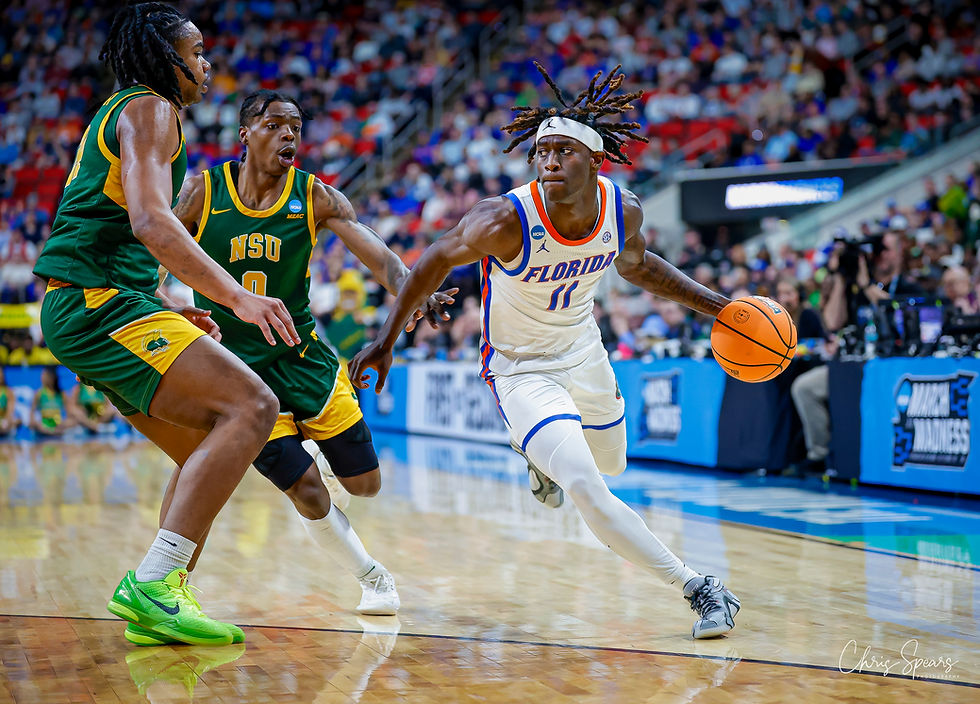
While not part of either case, the Florida Gators and Denzel Aberdeen emerged as high profile winners. Aberdeen, a 2022 high school graduate who played three years for the Gators and last season at Kentucky before transferring back to Florida in the spring, had petitioned for a waiver to play an additional year but was in limbo while waiting on an NCAA ruling. The Colorado case decided by Judge Sweeney took the power to decide out of the hands of the NCAA, meaning Aberdeen will play for the Gators, who are sure to begin the 2026-27 season as the No. 1 ranked team and odds-on favorites to win their second national championship in three years.
The NCAA, of course, in its best impersonation of Paul Newman as Luke Jackson, will appeal both cases, another wild swing that will hit nothing and will be countered by one more devastating right from Dragline. Upon the Friday ruling that is a nationwide injunction, numerous athletes went immediately into the transfer portal seeking a new place to play while others like Aberdeen are already in school at the place where they will play in the 2026-27 athletic year. There are also other cases pending against the NCAA including one in North Carolina filed by attorneys Ryan Downton and Darren Heitner on behalf of 50 athletes. Will that case see the light of day or does the Sweeney ruling cover all 50?
No matter, the NCAA has been rocked and its knees have buckled. Picture the NCAA as Luke Jackson, punch drunk, bloody and on its knees in a bare-dirt ring with everyone pleading to throw in the towel. Common sense says admit defeat to end the bludgeoning, but since when do common sense and the NCAA form an alliance? Not in the past and evidently not in the present but leave it to the NCAA to keep swinging wildly with no chance to connect nor with the power to do any damage.
Also, leave it to Charlie Baker, the head buffoon in charge of the NCAA to exacerbate the situation with a lengthy statement that reads: “Without targeted intervention from Congress, college sports cannot set nationwide rules everyone can play by and without Congress, failed professionals will continue to use college sports as a fallback option – robbing the next class of young athletes of college scholarships. It is long past time leaders across college sports call for the immediate passage of the bipartisan Protect College Sports Act – a bill supported by student-athlete leaders, Democrats, Republicans and NCAA schools from all three divisions. Today’s rulings and the chaos they bring to college sports are exactly why it’s time to pass this bill.”
How dumb. No 2026 freshmen are losing their scholarships because of this ruling and since the NCAA has already granted a fifth year to athletes whose high school graduation was 2023, no freshmen from 2027 and onward won’t be denied. Charlie Baker’s response is a futile attempt to sound like a compassionate tough guy whose only interest is the integrity of sports. Yeah. Right.
If the NCAA actually had a shred of integrity it would admit defeat in the current eligibility cases and amend its 5-for-5 legislation to include last year’s fourth-year seniors who were part of the 2022 high school graduating class. Instead, it chooses to fight.
The way the NCAA thinks things through, any admission of defeat is an admission of weakness. What the NCAA fails to understand is that running to Congress while praying for passage of the Protect College Sports Act is an admission that it is incapable of making rules then enforcing them fairly. Nor does the NCAA seem to understand that its losses in the courtrooms are almost always followed by more setbacks in the appeals process that only further the perception that the NCAA’s sell-by date expired long ago.
There would not be a need for either these endless challenges in court or Congressional intervention if the NCAA had applied common sense and fairness during the previous decades. The problems facing college sports today exist in large part because the NCAA has habitually made the wrong choices on which hills it intends to dig in and fight.
The NCAA wants to reel in out of control spending in college sports through implementation of the Protect College Sports Act. Whether it’s this bill or something else something has to be done but at the same time, what kind of signal does the NCAA send out by racking up millions in billable hours to lawyers who go to court where they lose, all the while burdened by the precedent of one inept decision after another?
In the movie “Cool Hand Luke,” Luke Jackson wouldn’t give up and kept on fighting. When the simpler thing would have been to admit defeat, do the time and leave the chain gang camp as quickly as possible, Luke Jackson couldn’t help himself. He kept fighting, kept challenging and eventually was killed by the people in charge.
In this modern day re-enactment of “Cool Hand Luke” which was filmed between Starke and Raiford, the NCAA has been beaten to a pulp in the courts but it refuses to give up. Rather than admitting defeat it fights on while hoping Congressional intervention will come to its rescue. Memo to the NCAA: The Protect College Sports Act won’t make it to the Senate floor before the August recess and when Congress reconvenes in September there won’t be enough time for the bill to be debated and voted on in both the Senate and the House of Representatives before adjourning for the campaign trail ahead of the November mid-term elections.
Even if the Protect College Sports Act is passed this fall it will have no bearing on the cases that have granted injunctive relief for sports that begin in earnest in September when football, volleyball and soccer are in full swing followed by basketball tipping off November 2. Time can’t save the NCAA on this one, nor can the Congress.
For Gators, this is good news since Denzel Aberdeen will have a chance to end his career where it started – suiting up for the University of Florida. You have to hand it to Denzel. He didn’t get the NCAA waiver which he requested but he won without going to court either. It was like winning at poker with bad cards and a good bluff.
As Dragline said when Luke Jackson bluffed his way to a poker win with a handful of nothing, “Sometimes nothin’ can be a real cool hand.”


Thank you Franz!
As always, Franz, your analysis of the NCAA is spot on.
On another topic, any idea why the emojis button isn’t appearing on this post?