We Can't Put The Toothpaste Back In The Tube

By FRANZ BEARD
GatorBaitMedia.com
“You know, I'd like to quit thinking of the present, like right now, as some minor, insignificant preamble to something else." – Cynthia Dunn from the movie “Dazed and Confused”
Dazed and confused. Is there a better way to describe exactly what is going on in college sports these days? The current dazed and confused condition that college sports finds itself in right now is so absolutely chaotic that it does indeed seem like an insignificant preamble to something else.
Something else. As in if you think things are bad now, brace yourself. It’s only going to get worse. The toothpaste that is out of the tube – also known as NIL and the transfer portal – isn’t going to go back in.

Please do not ask who’s in charge of this mayhem because then it would require going into some lengthy monologue about Mark Emmert, the man to whom the university presidents who allegedly have the final say in NCAA matters gave a contract extension and a raise to something like $5 million a year. Emmert is an academic allegedly in charge of the organization that is supposed to regulate and maintain order of the multi-billion-dollar college sports industry. Allegedly is appropriate because if Emmert could actually lead, then he would have done something intelligent. When it comes to sports, at least, if Mark Emmert actually had a functioning brain he would take it out and play with it in his spare time.
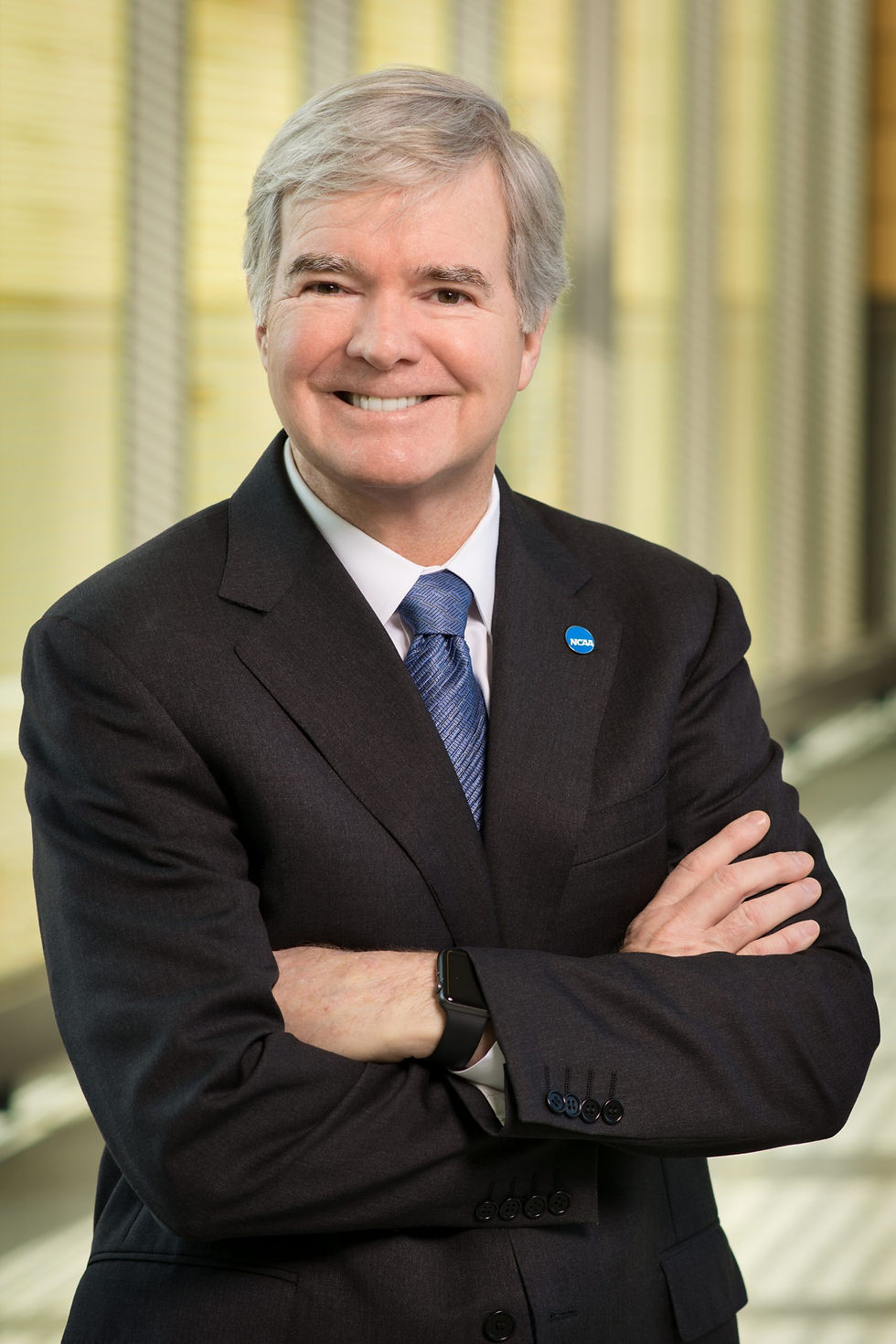
Mark Emmert is the personification of The Peter Principle, whose abiding truth is that people in high places will continue to be promoted until they reach a level of total incompetence. Emmert probably was a good university president. As the CEO of a sports business? An utter disaster.
It is precisely because (a) Emmert has no clue what he’s supposed to be doing and (b) the university presidents who voted Emmert the big raise and contract extension know even less that we have a fine mess of NIL and an out of control transfer portal that seemed to have joined forces to become a lethal 1-2 punch that threatens to send the NCAA and its bloated bureaucracy into Never Never Land.
Not that Never Never Land for the NCAA is such a bad idea. It may, in fact, be the best idea. Blow the damn thing up. Start fresh. Put real people with real ideas and solutions in charge, but understand this: The toothpaste is OUT of the tube and it’s NOT going back in.
That isn’t to say there aren’t some potential solutions that could make NIL and the transfer portal more workable for everyone, but we aren’t going back to the NCAA’s antiquated “amateurism” model about which Supreme Court Justice Brett Kavanaugh wrote in NCAA v. Alston, “Nowhere else in American can businesses get away with agreeing not to pay workers a fair market rate on the theory that their product is defined by not paying their workers fair market rate. And under ordinary principles of antitrust law, it not evident why college sports should be any different. The NCAA is not above the law.”
Despite Kavanaugh’s cruise missile fired across the bow, you just know that the NCAA will not be able to resist another court case. You would think the NCAA would have learned its lesson by now. Every time they choose to fight in court they lose and if they try to make a court case of the mess they’ve made with NIL, in particular, they’ll lose again.
But something should be done, or at least we think something should be done. Perhaps it’s because we’ve grown so accustomed to the old way of doing things that we cringe at the thought of not only true free agency, which the portal has given us, but NIL which makes it so that recruits of all types – high school, juco or transfers – can sell their services to the highest bidder. Nobody likes it, but what can be done to make sense of it all?
Last week Southeastern Conference commissioner Greg Sankey and Pac-12 commissioner George Kliavkoff went to Congress to ask for help. Perhaps it was at the behest of the NCAA or maybe they simply have thrown their hands in the air at the ineptitude of the NCAA and figure that any solution Congress could offer couldn’t be worse than what we have now.
Or could it? The men and women in charge in Washington can’t seem to agree on anything, so how could they possibly come up with something that could forever change college sports in a positive way?
The NCAA, meanwhile, put out a memo that it thinks will reel in these NIL collectives run by boosters. The NCAA cleverly worded the memo and its proposed guidelines to say it’s all for athletes making money off their name, image and likeness, but it’s the boosters – the people putting up the money in the first place – that they’re after. Just to show how tough they are, the NCAA is threatening to sanction the boosters and the schools whose boosters pay players to gain a recruiting advantage.
Oh really? Lest anyone forget, the NCAA was gifted all this lovely testimony under oath and evidence in the form of FBI wiretaps to put a whole passel of schools that were cheating. Six years later, we’re still waiting for the NCAA to actually go toe-to-toe with the likes of Kansas or Arizona or LSU or Louisville. Oh, sure, they’ve issued these tough-sounding, we’re gonna get you and nail your hide to the wall notices of allegations, but nobody has actually gone before the Committee on Infractions or the Independent Accountability Resolution court. What this means is the NCAA is good about sounding tough, not so good when it comes to enforcement.
That is only one reason why the lawyers who work for and in some cases run these collectives can barely contain their giggles.
“I think it’s adorable that the NCAA is acting as if they’re going to crack down on anything,” said Russell White, a sports agent based in Utah who runs Oncoor Athlete Marketing told Stewart Mandel and Nicole Auerbach of The Athletic.
White has 80 or so athletes under contract. He’s willing to go to court with the NCAA and he is not exactly worried about losing.
Nor is attorney Mike Caspino. Several recruits he represents have landed NIL deals with booster collectives to different schools with deals alleged to be worth six and seven figures.
“The moment they come to try to interfere with one of my clients’ deals – the next day is the moment they get hit with an antitrust lawsuit,” Caspino told Mandel and Auerbach. “They’re saying there’s a whole class of people [boosters] who can’t participate in the market for athletes’ NIL rights. That’d be like saying red-haired people can’t buy meat. That’s antitrust.”
Even coaches find it comical that the NCAA wants everyone to believe they can go back to being the scary bullies they were back when Walter Byers ran the organization.
“They’re talking a big game, but they always have talked a big game about that,” Notre Dame basketball coach Mike Brey said at the ACC Spring Meetings at Amelia Island.
The NCAA stance is to play the role of the threatening tough guy only history says they’re not that tough and incapable of mounting a successful defense when challenged in court. And you know there will be challenges, particularly since it was the NCAA that unleashed NIL on us without any structure to it. To put structure to something structureless might have worked in the past before players were able to cash in but the times have changed. Now players can make money and trying to scale back what a collective can offer might cross that antitrust line that Justice Kavanaugh drew in the dirt in NCAA v. Alston last summer when he said the NCAA is “conspiring with competitors to pay no salaries to the workers who are making the schools billions of dollars on the theory that consumers want the schools to pay their workers nothing.”
We have a dilemma on our hands for which no one seems to have a clue how to come up with a structure that certainly won’t please all the people all the time but may, potentially, please enough of the people enough of the time. A majority of people seem to think this current way of doing things is unsustainable so obviously we need solutions.
Here is what football’s equivalent of The Godfather – Alabama’s Nick Saban – has to say about what’s at stake if something isn’t done and soon.
Speaking to reporters Wednesday before a golf pro-am in Birmingham, Saban said, “College football has always created a parity with players and competition, which I think every league already has, whether it’s with the NFL salary cap or whatever. And you know, now, I think NIL is great for the players, they should have an opportunity to earn money – I’m fine with all that – but if we don’t maintain some level of parity. We’ve always had the same (number of) scholarships, same Alston money, same cost of attendance, same academic support, same medical attention for everybody. And if we don’t create that balance, I think it’s going to affect the competitive standard of the game in the future, and probably affect other sports. So hopefully somebody will be able to figure that out.”
NIL when coupled with free agency – what else can you call the transfer portal – seems to be the 8-inch stiletto stabbed multiple times into the heart of the NCAA. This is another mess entirely of the NCAA’s making and just like NIL, it’s one of those toothpaste out of the tube things. How do you tell players who have been given the right to transfer to another school without sitting a year that it was all just a big joke, that they have to go back to the old way of doing things? And, now that players in the portal can shop their services for the best NIL deals, it’s a double whammy. Stopping it may be a great idea in theory, but it’s only going to take one lawsuit – you know there will be hundreds – to put the kibosh on the notion that players can’t shop for the best deal or that collectives and boosters can’t offer incentives for transfers to come to their schools.
Iowa athletic director Gary Barta says that if players had to sit out a year, it would slow down NIL. Maybe, but is the NCAA willing to lose another court case over the transfer portal? You know they’ll lose and in this case it’s a certainty because how can it be justified that a coach can leave at any time without consequence but a player who wants to leave is back to the old sit out a year model?
Former TD Ameritrade CEO and Coastal Carolina coach Joe Moglia offers a solution that won’t shut down the transfer portal but it could at least eliminate the flood of freshmen who seem to make up an inordinate number of portal entries. Moglia proposes that once a kid signs his scholarship, he is bound for one year to the school before entry in the transfer portal is allowed.
“I love the idea of student-athletes, but right now, a good student-athlete is up for auction any time he wants, and that’s a ridiculous way for a college or a business to operate” Moglia told Chris Vianny of The Athletic. “Professional sports don’t operate that way.”
Moglia is correct. Professional sports do not operate that way. Professional sports have contracts. Professional sports have structure. Professional sports have a sustainable model. It seems quite obvious that both the transfer portal and NIL were simply thrown out there without being given a whole lot of thought to consequences. If a lot of thought was given then whoever was doing the thinking should be fired on the spot, but knowing the NCAA, that person will be given a promotion. After all, that is exactly the way The Peter Principle works.
There are people who believe that the only solution to the dilemma we now face is to make athletes employees of the schools they represent, which would give coaches the right to hire and fire as well as giving athletes a chance to unionize and bargain for benefits. There are plenty of holes that can be punched into that argument because not all states have the same rules and regulations for unions, employee rights, etc.
There does seem to be consensus that the only possible way to get anything done will be to ditch the NCAA completely and start all over with a brand new organization headed either by a commissioner with absolute authority in the Pete Rozelle template or a board of directors that are football/sports people and not clueless academics. Run the new organization the way a professional sports league runs things. It makes plenty of sense but to make it work it would require the academics who run sports today to take their thumbs off the model. We’ve heard it for years that those that can do, those that can’t either teach or climb the academic administration ladder. No organization in the world better illustrates a measure of truth to that statement quite like the NCAA.
It’s time to let the people who can do what they can do and for the academics to go back to writing papers and congratulating each other on how brilliant they are.
Ditching the NCAA would certainly be a nice beginning to resolving the issues facing college sports, but no one seems to be offering a plan for secession much less a leader or board or directors that can transform college athletics into a modern, streamlined organization. The need is for an organization that is capable of improving the games on the field and putting together a rulebook that doesn’t require 10 lawyers in compliance departments at each school to translate all while dealing with the ever-changing needs of the kids who make the games possible.
At some point in time there will have to be a replacement for the NCAA, which is like the Titanic, ignoring all the warning signs that it’s about to hit an iceberg. As practical an idea that may be, it’s not a quick fix, at least in the current mindset. It seems that everyone is waiting for someone to do something. There is plenty of rhetoric, lots of ideas that might work if combined with other good ideas to form a workable plan, but no one is taking the lead and saying the gig is up for the NCAA and here is what we’re going to do to make fundamental and lasting changes.
Until someone bold enough to lead the way steps forward with a plan that can generate enthusiastic support from at least the schools that make up the Power Five, then we’re stuck with the chaos we now have. Donkeys may fly before the NCAA escapes its own shadow and does something that makes sense.
So, until a Messiah is found for college sports, get used to well-heeled boosters buying players, whether high school, juco or transfers, and for transfers to make decisions based on the old line from “Jerry Maguire” – “Show me the money!”
The toothpaste is out of the tube and we can’t put it back in.


Comments