Is the Napier hire a sign Florida no longer operates on the cheap?

Updated: Dec 4, 2021
“Florida’s last three coaches all got fired in fewer than four full seasons. The program has gained a reputation as one that chews up and spits out coaches. The last two coaches have been fired during the season after a season that ended in the SEC title game. Meanwhile, Florida’s facilities have lagged behind the rest of the SEC’s for years. The expectations equal LSU’s or Oklahoma’s, but the resources have not.” – Andy Staples, The Athletic
Sunday afternoon, the University of Florida will formally introduce Billy Napier as its latest football coach in the eternal search to find the next Steve Spurrier. Napier succeeds Dan Mullen, who took off like a rocket ship for his first 35 games (29-6 record) only to run out of fuel and drop back down to earth like space junk in his last 14 (5-9 record).
Per athletic director Scott Stricklin, winning and losing wasn’t the most prominent factor in Mullen’s demise. There were off-the-field related issues, most of which have been kept hush-hush from the general public. One notable reason for Mullen being pink slipped was recruiting, a problem from the beginning that dropped off notably in year four as the losses began to mount. When expectations are as high as they are every year at the University of Florida, the only way to be certain to at least come close to meeting them is a steady flow of highly regarded talent and that just wasn’t happening.
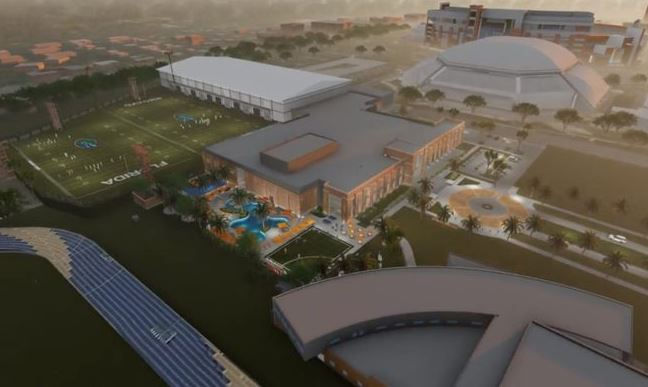
Some of the recruiting issues have everything to do with Mullen’s general distaste for one of the job’s necessities, but not all the blame can be pinned on him. Facilities have been a problem and while recent efforts such as the building of the new James T. Heavener Football Training Facility are helping to close the gap, until that new building opens in the spring of 2022, the Gators are going to be forced to sell hope instead of something tangible.
This is why the hiring of Napier is so critical. When he was coaching for Dabo Swinney at Clemson and Nick Saban at Alabama, Napier made his mark as a relentless recruiter who delivered in a big way on signing day. When he took over the head coaching job at the University of Louisiana in 2018, the first thing Napier did was tour the state to repair frazzled relationships with the state’s high school coaches. From that good start, Napier kept bringing in recruiting classes that ranked among the very best in the Sun Belt Conference and the results were manifested on the field where the Ragin Cajuns are 39-12 in the last four seasons with a chance to win the conference championship Saturday against Appalachian State.
Napier, it is hoped, can salvage the recruiting class of 2022, plus bring in some transfers to plug holes in the roster as a stop gap measure for next season. Then, with the opening of the Heavener Facility, Napier will have all the tools at his disposal to bring in the kind of athletes that will be required for the Gators to come close to matching the expectations of the fan base.
So, how did Florida get into this mess in the first place?
"We're not into bells and whistles. We're not getting into an arms race, and they're not an issue in my opinion affecting our success." – Jeremy Foley
Jeremy Foley said that back in 2014 when he was still the Florida’s athletic director. On Foley’s watch from 1991 until his retirement in 2016, the Florida Gators were the dominant athletic program in the Southeastern Conference and an annual top five finisher in the Director’s Cup, symbolic of the nation’s best athletic program from top to bottom. When he succeeded Bill Arnsparger as the AD in 1991 at the age of 39, Florida’s reputation was a rogue athletic program where bending and often times blatantly breaking the rules was commonplace.
During his 25-year run at UF, the Gators won 28 national championships including three in football (1996, 2006, 2008) and two in basketball (2006-07), all without a hint of an NCAA scandal. During the 1980s prior to Foley taking over, Florida was sanctioned by the NCAA twice in football, once in basketball.
There are plenty of reasons to admire Foley for his accomplishments but none are more important than keeping the Gators out of the NCAA jailhouse, especially in the two most visible and prominent sports. But, there is also that teensy matter of facilities. It’s unfair to say that facilities issues had their beginning under Foley since UF has a long history of going cheap, but as one school after another in the SEC has upgraded and surpassed Florida in that respect, a lot of fingers get pointed at Foley. Florida dominated football in the SEC from 1990-2009 but since then the Gators haven’t won an SEC title much less a national championship. Better facilities, which in turn leads to better recruiting classes, are one of the chief culprits in the demise.
In a 2014 USA Today article, Dan Wolken quoted one coach/administrator type: “It’s mind boggling. That place should have the best facilities in the country. How was that allowed to happen?”
Actually, facilities that lag behind the rest of the SEC is not exactly a new trend.
Back in 1966 Florida basketball coach Norm Sloan got one of those “Mama called” offers to come home to North Carolina State, where he had played basketball for the legendary Everett Case. Sloan, who had recruited a team capable of making the Final Four in 1967, didn’t want to leave even if it was his alma mater and Everett Case saying we need you. Sloan was making $15,000 a year and even though North Carolina State was offering more, it wasn’t about money when he went to athletic director Ray Graves to gauge how badly Florida wanted to keep him.
At the top of Sloan’s request list was new carpet and new furniture in his office and the office of his assistant coaches.
“He [Graves] looked me square in the eye and told me no to the carpet and furniture and maybe I ought to take that North Carolina State job,” Sloan told me at the Albert Pick Hotel in Greensboro on a March night in 1974 after North Carolina State had beaten Al McGuire and Marquette to win the NCAA basketball championship.
Sloan’s replacement at Florida in 1966 was Tommy Bartlett, an assistant coach at Tennessee who was recommended by his old buddy Bob Woodruff, the UT athletic director who had been a teammate and Graves’ predecessor as the football coach at UF. That Florida basketball team in 1966-67 went 21-4, the best record in school history but the Gators could have and should have done better. The Gators had the tallest team in the country and enough talent to make the Final Four, but as nice a guy as Bartlett was, he wasn’t the kind of coach who was going to win championships. This was a Peter Principle hire. Bartlett rose beyond his level of competence and by 1973 he was fired. He went on to coach tennis at Chattanooga where his men’s and women’s teams won numerous Southern Conference championships. He should have been coaching tennis all along.
Given the amount of talent Sloan left behind – the team included future pros Gary Keller (6-9) and Neal Walk (6-10) – a lot of very successful coaches would have jumped at the opportunity to coach the Gators, but Graves went cheap.
When Bartlett was fired after the 1973 season, Graves turned to John Lotz, Dean Smith’s top lieutenant at North Carolina. Lotz brought Dick Grubar with him as his top assistant. They were promised that a first class arena would be built to replace ancient Alligator Alley, which was on the bottom rung of basketball facilities in the SEC. Lotz never got to coach a game in the Stephen C. O’Connell Center, which was built on the cheap with an air-supported bubble dome. The O-Dome design was an attempt to stretch limited resources since UF was relying on state funds and booster contributions were grossly inadequate. Ground was broken in 1977 but there were construction delays caused by substandard concrete beams that had to be repaired or replaced. Lotz was Dean Smith’s best recruiter. At Florida he couldn’t recruit because of bad facilities. Again, UF was penalized by going cheap.
When Douglas Adair Dickey was fired after a 4-7 season in 1978, the Florida search committee headed by president Robert Marston and prominent booster Warren Cason hired Charley Pell away from Clemson, where he was 18-4-1 in two years. Pell was hired for $79,000 a year and he took the Florida job without ever visiting and touring the facilities.
Ward Pell recalls the first time she and Charley saw what they were getting into. Florida Field was a dump. The team locker rooms in Alligator Alley were cramped and 20 years behind the times. Yon Hall where athletes lived was in disarray. When they went to the stairwell to go up to the coaches offices on the West Side of Florida Field, the wallpaper was peeling off the wall.
“I said to him, ‘Why in the Sam Hill are we coming to this place, can’t we call Clemson and see if they’ll take us back?’” she recalled. “And this was before we saw the head coach’s office.”
When they opened the door to what would be Charley’s office, the first thing she saw was the sofa.
“It was orange vinyl and it had duct tape covering up places where it was torn,” she said. “Ugliest thing you’ve ever seen and about that time in walks Joe Kines, who says, “You think this is bad, want to come to my office to see my desk?’”
It was a metal desk hooked to the wood in the office by a screen door hook.
The weight room was so small that football players went over to Gainesville High School to lift because Jim Niblack had a weight room that was better than most colleges at the time. Charley would fly down to Fort Lauderdale to sweet talk Wendy’s CEO Dave Thomas into donating the money to build and equip a modern weight room.
“Before we ever started two-a-days in the summer of 1979, we had done 329 speaking engagements,” Ward recalled. “Three weeks before our first kickoff Charley had to kick 26 players off the team. Even during the season Charley was out there charming everyone and asking for money. It didn’t end there. We probably would have won a national championship by 1982 if he could have spent as much time coaching football as he did fund raising.”
If not for Pell taking fund raising to a never before seen level at UF, the facilities would have deteriorated even further.
Foley upgraded facilities on a regular basis, but it was always with an eye on keeping costs down. When Steve Spurrier went on the most successful 12-year run in UF football history – 122-27-1 with six SEC championships and the 1996 national title – Florida got away with below par facilities because the Gators were winning so much. There were calls even then for an indoor practice facility (wasn’t opened until 2015) but the response was always “it’s Florida, we have sunshine and good weather, why do we need an indoor facility?” Both UCF and Florida State had their indoor facilities open long before UF as did most of the schools in the SEC.
When Florida did build an indoor facility it wasn’t without glitches. When Jim McElwain became the new head coach in 2015 he noticed that the facility being constructed was only 70 yards long. He demanded – and got – an agreement to expand to 100 yards. More money, more time and there was still another glitch. The hastily revised plan to build a 100-yard field didn’t include bathrooms or end zones. More money. More time.
Rather than build a new basketball arena befitting of a national championship-caliber coach in Billy Donovan, Florida went ahead with a plan to gut and renovate the decrepit O-Dome. There were delays – heard that before? – because a local construction company had to be replaced by the Birmingham conglomerate Brasfield and Gorie. There were cost overruns said to go well beyond the announced renovation price of nearly $65 million.
The renovated O-Dome is superior to what the Gators had before, but as one very prominent booster has noted while shaking his head, “This is nothing more than lipstick on a pig.”
It should be noted that for $96.5 million Ole Miss built the state-of-the-art Pavilion and for $86 million the new Auburn Arena was built. Both are superior facilities to the O-Dome. Florida could have built something brand new that would have made recruiting so much easier, but as usual, cheap was the by-word.
Foley had so many of the good qualities you want in an athletic director, but he was far too bottom line conscious and when he retired in 2016 there was no long range plan to upgrade the entire athletic plant to bring UF facilities into the 21st century. Since taking over in the fall of 2016, Scott Stricklin has prioritized facilities. He’s overseen the renovation of the softball stadium so that Tim Walton’s Gators have a facility befitting a program that has won two NCAA titles and made the Women’s College World Series 10 times since 2008. Where McKethan Stadium once stood a new standalone football facility is under construction and set to open in the spring of 2022. The Florida baseball team moved out to the west side of campus into a brand new stadium in 2020.
There will be renovations to Ben Hill Griffin Stadium and to the tennis facilities where the UF men won their first NCAA title in 2021 and where the UF women have won seven, the last one in 2017. There will be other upgrades as Stricklin brings the Florida athletic facilities to a level where UF can compete with the upper echelons of the Southeastern Conference.
“Before Scott came along there was no long-range plan for facilities,” one prominent booster admitted. “When it comes to facilities as well as doing what we need to bring championships here, he gets it. He understands that kids are going to go where they have the best facilities. Our recruiting is way behind Georgia, Alabama, Texas A&M … they all have much better facilities than we do, but facilities aren’t the only thing. They have more analysts, bigger recruiting staffs, more support staff … they don’t go cheap.”
Recruiting was never Dan Mullen’s strong suit but he was handicapped by facilities that continue to lag behind, a recruiting budget that is $2 million less than Georgia and far fewer analysts and recruiting/personnel specialists. Florida’s indoor practice facility needs work. The practice fields are poorly maintained. There is no separate dining facility for athletes unlike they have at Alabama, Georgia and just about every other top school in the country.
Alabama has 36 full time recruiting people. At Louisiana, Napier has 12, which is more than adequate in the Sun Belt and still more than UF had under Mullen. There is no way Stricklin could have hired Napier without promises to upgrade every aspect of recruiting from facilities to analysts to support staff to the overall budget. Napier cut his recruiting and coaching teeth under Dabo Swinney and Nick Saban, the two most successful football coaches of the last 12 years. Swinney and Saban have administrations that understand how football is the engine that drives the entire athletic program. When they want something, cutting corners is not a consideration. It’s go first class or don’t go at all.
Will Stricklin and Florida go first class with Napier? It is being whispered among boosters and others who know Napier that he gave Stricklin a list of demands that had to be met before he would agree to take the University of Florida job. That has a very Nick Saban type of sound to it, but it would figure that after one year as an Alabama analyst and three years as Saban’s wide receivers coach that Napier knows exactly what he wants and will not settle for anything less.
If the Florida administration is willing to give Napier what he wants, it will be a sure sign that they want to put an end to the reputation that this is a place that chews coaches up and then spits them out. None of the three previous coaches – Will Muschamp, Jim McElwain and Dan Mullen – made it through a full four years on the job. The revolving door has to stop and one of the ways to do it is to upgrade facilities and budgets to the point that the head coach has everything in place to win.
In Steve Spurrier’s day and during the six years Urban Meyer was the head coach, Florida was able to win championships on the sheer force of their personalities. To those who would think Florida should simply hire coaches with those Alpha-male personalities, consider the fact that even though Nick Saban is an Alpha male with a documented “process” that produces championships, it can’t be done without an administration that gives him the tools he needs to win at the highest level. Georgia has shown a willingness to give Kirby Smart whatever he wants and needs. Nick has won six national championships since Florida’s last one in 2008 under Meyer. Georgia has been to the College Football Playoff in 2017 and is on the cusp of its first national championship since Herschel Walker was running over people instead of for the United States Senate.
For Florida to breathe the rarified air that Saban and Smart inhale, Napier has to be given what he needs to succeed. It will take a much larger cash outlay, but money should not be an object, not with a new SEC contract with ESPN that will guarantee a $17 million increase in the current conference distribution ($46 million) and the promise of a newer contract that will guarantee even more when Texas and Oklahoma join.
Napier will have already been on the Florida job for a few months when the long-awaited James W. Heavener Football Training Facility opens in the spring. That $85 million facility is a step in the right direction and a sign that Florida will no longer operate on the cheap. If Napier is given the other things he needs to bring in the recruits, then there is a chance Florida’s performance on the field and on the recruiting trail can meet the expectations.


Comments